


 By
By Can you imagine your 13-year-old child taking another child’s life? All at the hands of a dazzling mobile screen?
Gone are the days when growing up with the likes of Enid Blyton, Roald Dahl, and R.L Stines would be one of the greatest joys of the most magical, most colorful phases of one’s life. But this is the era of Gen-Z where growing up in the world of Andrew Tate, Adin Ross (popular streamer), and Jordan Peterson (author and psychologist) is the unfortunate reality.
And the latest harrowing testament of the same reality, is Netflix’s latest crime drama, Adolescence, which has become the talk of the town owing to its immaculate one-take production & impeccable storytelling. Created by Jack Thorne and Stephen Graham, who also plays father to Jamie, the show has amassed over 24.3 million viewers and holds a 99% rating on Rotten Tomatoes.

SPOILER ALERT: This story contains spoilers for the show. So if you haven't seen the show, please do and come back here for a read.Murder in the Digital Age

The premise was simple. The four-part drama follows Jamie (debutant Owen Cooper), a 13-year-old boy who is the prime suspect in the murder of his classmate Katie (Emilia Holliday).
The first episode has us drawn to the questions simmering on the surface. What went down on the fateful night of the murder? This young child couldn’t have done something so horrendous. Who murdered Katie?
But soon enough, we’re exposed to the questions beneath the surface of reality. What must have been the motivation behind all this? And the more horrific answer- while many of us are working at protecting our kids from the world around them, we might not really be preparing them for it…

We move on to the second episode, capturing the worst nightmares of raising young ones in the digital era, the toxic internet subculture influence and the vast gulf that exists between parents and their children.
The Toxic Web We Weave

The lead detective, Bascombe (Ashley Walters), still in the dark about what drove Jamie to commit the heinous crime, tries investigating students about their acquaintance and based on their earlier Instagram interactions, he is under the impression that Jamie & Katie were on friendly terms, if not romantic.
That is, until his 15-year-old son, Adam (Amari Bacchus) clarifies that Katie, in fact, began a cyberbullying campaign against him through emojis on his social media posts, casting him an ‘incel’, which happens to be a popular concept in the ‘manosphere’. It’s a dizzying realization for Bascombe and for the viewers about the malicious ideas that kids under their wings are exposed to and how they are easily permeating their lives…

Don’t think you’re the only one unfamiliar with these terms! I was just as clueless and had to google what it implies. Turns out, ‘incel’ stands for involuntary celibate, a supposed faction of men frustrated by their lack of success with women forced to turn celibate; a term Jamie persistently rejects. Imagine considering celibacy for a 13-year-old boy, and based on what?!
The other idea presented in the “manosphere” is the 80-20 rule, which says that 80 percent of women are attracted to only 20 percent of men, and in order to impress them you gotta trick them, because you’ll never get them through the traditional ways! Wondering who’s putting such ideas in these juvenile minds? It’s the men on the internet who are normalising such a corrupt understanding of the world.
It’s the same name you read at the beginning of this story. The most notorious and notable being Tate. An internet personality currently booked for crimes as grave as sex trafficking, rape & organised crimes is one of the most famous figures on TikTok, with videos of him watched over 11.6 billion times. He was also the most Googled person in 2023. It’s his controversial words that have propelled him into the mainstream- homophobia, racial slurs, misogyny, violence against women, you name it, and he’s said it all!
The world we’re living in has apparently forgotten what masculinity is, with viral concepts presenting a “hyper-macho” version of it that shuts down any chance for boys to understand & become true gentlemen, all under the guise of concerns with ‘toxicity’.
An idea of toxic masculinity, loneliness, fear of getting cancelled, feelings of isolation, low self-worth, feeling unattractive were just a few things that we see Jamie struggling with. And you thought the identity crisis kicked off at the age of 20?
Inside the Mind of a Young Killer
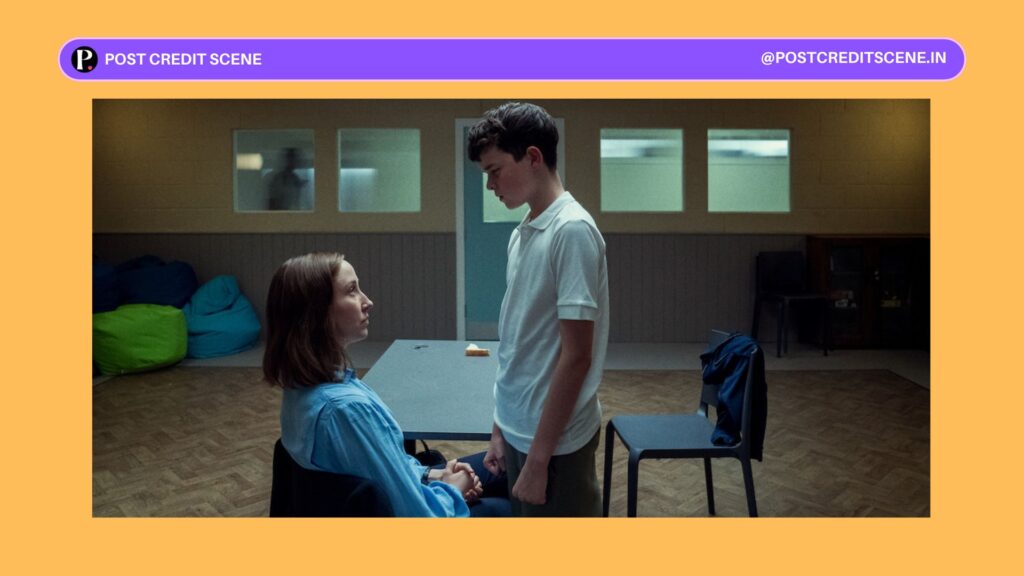
We get a closer look at this through the eyes of Briony Ariston (Erin Doherty), a psychologist in the third episode. She questions him about his views on women, his father, his anger, and sexual encounters at his age. During this exchange, we see Jamie go from a kind, innocent boy into a brooding, wrathful teen real quick. He even negs her with mimicry and offensive name-calling as a way to impress her.
Why? Well, the makers have admitted that “he’s using whatever he’s been taught online to try to control the situation”.
He also tries to blend and balance the traditional expectations of his father’s generations with the modern messaging floating around him.
The Parents’ Painful Realization
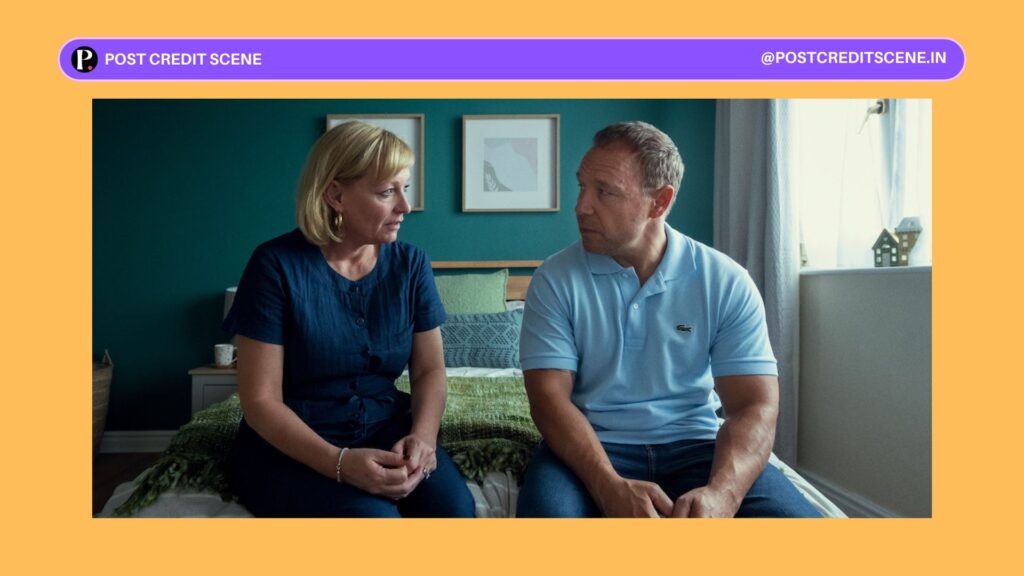
It’s the final episode that is the most jarring, where we see Jamie’s parents struggling to understand what played a part in creating the “devil” their son had become.
“He was in his room, wasn’t he? We thought he was safe”? Perhaps he wasn’t.
They go over details of how Jamie would lock himself in his room for hours with the screen, isolated from the real world. They’re slowly accepting the grim reality, and a pivotal moment in the final episode shatters all their hope that they had been holding on to.
Ask yourself. Is the internet to be blamed for creating monsters out of young minds? Is it those few guys making videos to get viral? Was it the casual bullying? Or just allowing your kid unrestrained access to the internet?
Perhaps there’s no simple answer. The discomfort Adolescence creates isn’t from its fictional horror but it’s undeniable truth. While we’re debating screen time limits and content filters, our children are silently absorbing worldviews that could fundamentally alter who they become. The most terrifying aspect of Jamie’s story isn’t that it’s shocking, it’s that it’s plausible. Behind closed bedroom doors across the world, countless versions of this story are unfolding in real-time, most thankfully without the fatal conclusion. But all changing young lives forever.