

 By
By Once in a while, a movie comes out, jolting us out of our slumber of oblivion and drawing our senses to the things that really matter.
The year 2007 was a landmark for Bollywood for it had releases as ‘Welcome’, ‘Bhool Bhulaiyya’, the infamous ‘Om Shanti Om’ vs ‘Saawariya’ with its starry debuts, ‘Chak De India’, ‘Namastey London’, ‘Jab We Met’, ‘Dhamaal’, ‘Guru’, ‘Life in a Metro’, ‘Awarapan’, ‘Johnny Gaddar’.. And so on. Each of them iconic and enduring in its own way. However, amid the sea of movies that year, came an endearing one that had us bawling and gasping for breath in the theatres.
Aamir Khan’s directorial debut ‘Taare Zameen Par’ that made us comprehend the very power of cinema.
For the uninitiated, we are in Ishaan’s world (played by the wonder kid Darsheel Safary), a boy who suffers from a learning disorder called dyslexia, and is constantly harangued as a duffer, but has an incredible knack for painting. At home and school, he is often juxtaposed with his elder brother Yohaan, who is the topper in academics & sports. Ishaan’s failing school grades drive him to a boarding school, signaling the ultimate sign of parental rejection. A blessing in disguise for Ishaan, because here he meets his art teacher (Aamir Khan) who helps him overcome the hurdles. The movie sensitively captures the intricacies of the mother-child bond, parental pressure, and predicament of special children.
Fans were left mighty excited when they got to know that a sequel to this movie, Sitaare Zameen Par, is slated for release in 2025. Helmed by RS Prasanna, the movie stars Aamir Khan, Darsheel Safary, and Genelia D’Souza in key roles. The story is said to follow the transformative journey of a man (Aamir Khan) who, through his encounters with special children, is compelled to confront his imperfections. The theme of the sequel is similar, with a focus on children with different abilities and challenges, but this time around, it’s Aamir’s character who’s at the receiving end of the help.
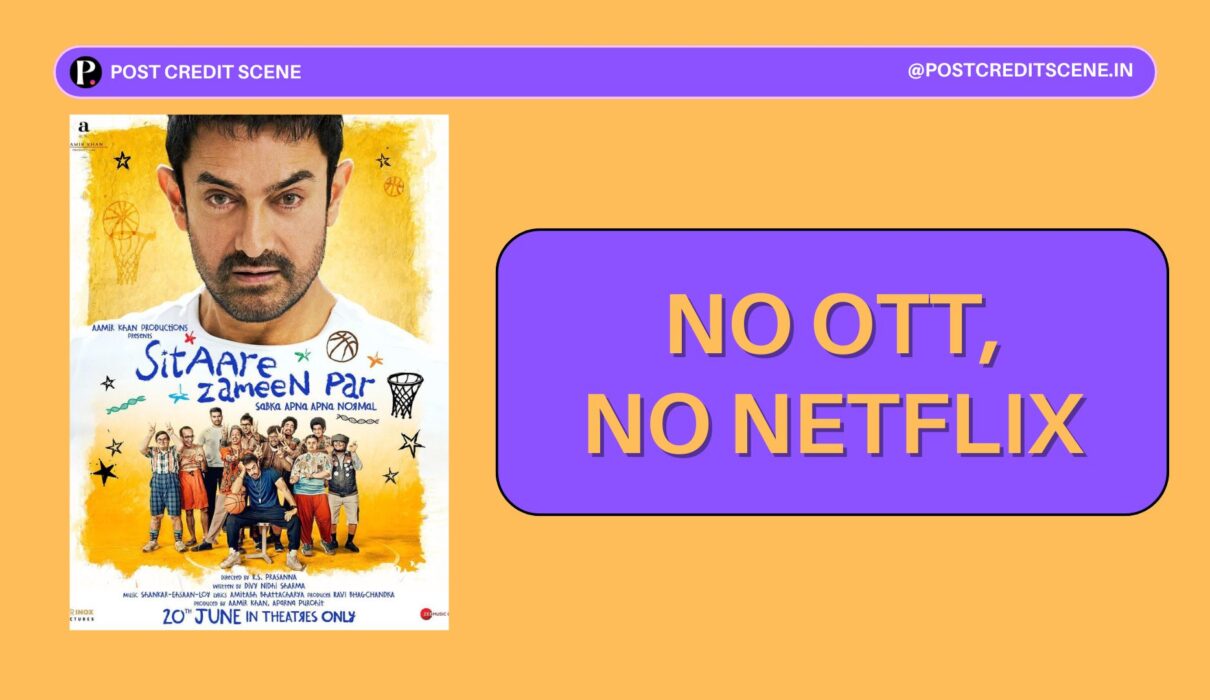
Another interesting update on the movie release, according to industry insiders, Aamir is planning to skip the OTT release and instead go ahead with a pay-per-view model. The makers are looking at a June 20 theatre release, after which ‘Sitaare Zameen Par’ will be available for pay-per-view on YouTube two months later. In the current scheme of things, a movie is made available on OTT platforms after eight weeks of its release, a norm that many, including Khan, have opposed.
Taking his previous experience into account with ‘Laal Singh Chaddha’ releasing on Netflix, Khan put forth a valid notion that the audiences will not feel the urge to go to a cinema theatre when they know the movie will be released on OTT platforms from the comfort of their homes, a few weeks after the release. And to combat the situation, Aamir has supposedly decided to release the movie on YouTube under a ‘pay-per-view’ model, two months after the theatrical release. To back this up, one can’t spot any streaming logo on the film’s poster.
What is pay-per-view, you may ask?
While streaming OTT giants are running steadily, and digital content is being consumed in a hundred ways, a pay-per-view takes a transactional route to entertainment. Viewers pay for what they want to watch, with the added luxury of choice- viewers can rent or purchase films, within weeks and sometimes days of the movie’s release.
Previously, the film industry, both Hollywood and Bollywood, have sought the PPV model as a way to recover from grappling theater revenues, specifically during the pandemic, whilst for studios, it’s another instant avenue for profit.
While it offers flexibility and exclusivity, the PPV model can be expensive because you don’t necessarily get the value you expect. It could intensify the digital divide, leading to content becoming less accessible for lower-income households, along with the risk of exhaustion from repeated micro-transactions.
On the other hand, you get the thrill of fresh releases felt right at your home, providing convenience, without having to wait for it to release on OTT. In Hollywood, the model has proved to be successful for hits like Mulan and Wonder Woman 1984, but a drag overall. Whereas, in the Hindi Film circuit, piracy remains a considerable challenge, we’ve had releases like Ishaan Khatter and Ananya Pandey’s starrer ‘Khaali Peeli’ releasing on Zeeplex, priced at 299 Rupees and Salman Khan’s ‘Radhe’, which struck 4.2 million viewers on day one.
Will the pay-per-view model be a lasting revolution or a fad? Or maybe evolve into the go-to model for high-demand films, the future of this experimental model remains uncertain.
For now, it remains an experiment, a cinematic memory bought and a story worth every cent.